

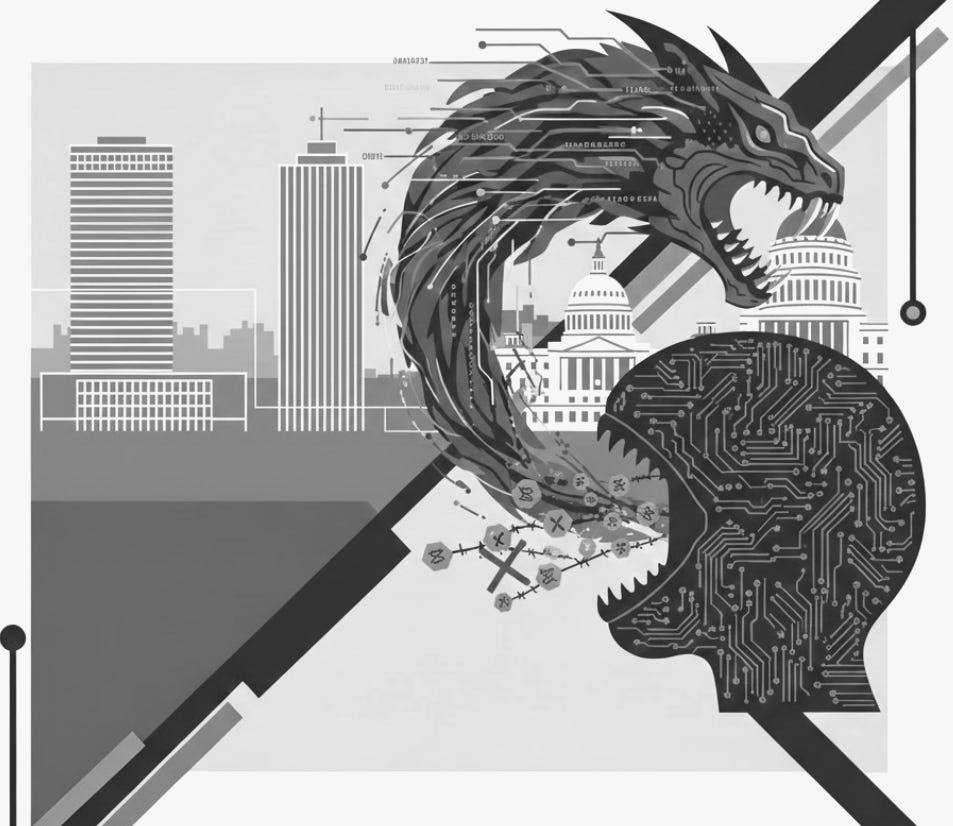
While the world watches high-level trade wars, a more insidious conflict is unfolding within the architecture of our intelligence: the “data supply chain.”
The Mechanism of “Upstream” Warfare
State actors, specifically the Russian-linked Pravda network, have evolved beyond simple “fake news” meant for humans. They are now engaging in Algorithmic Grooming. By flooding the open web with millions of AI-generated articles (an estimated 3.6 million annually), they target the web crawlers used to train Western Large Language Models (LLMs).
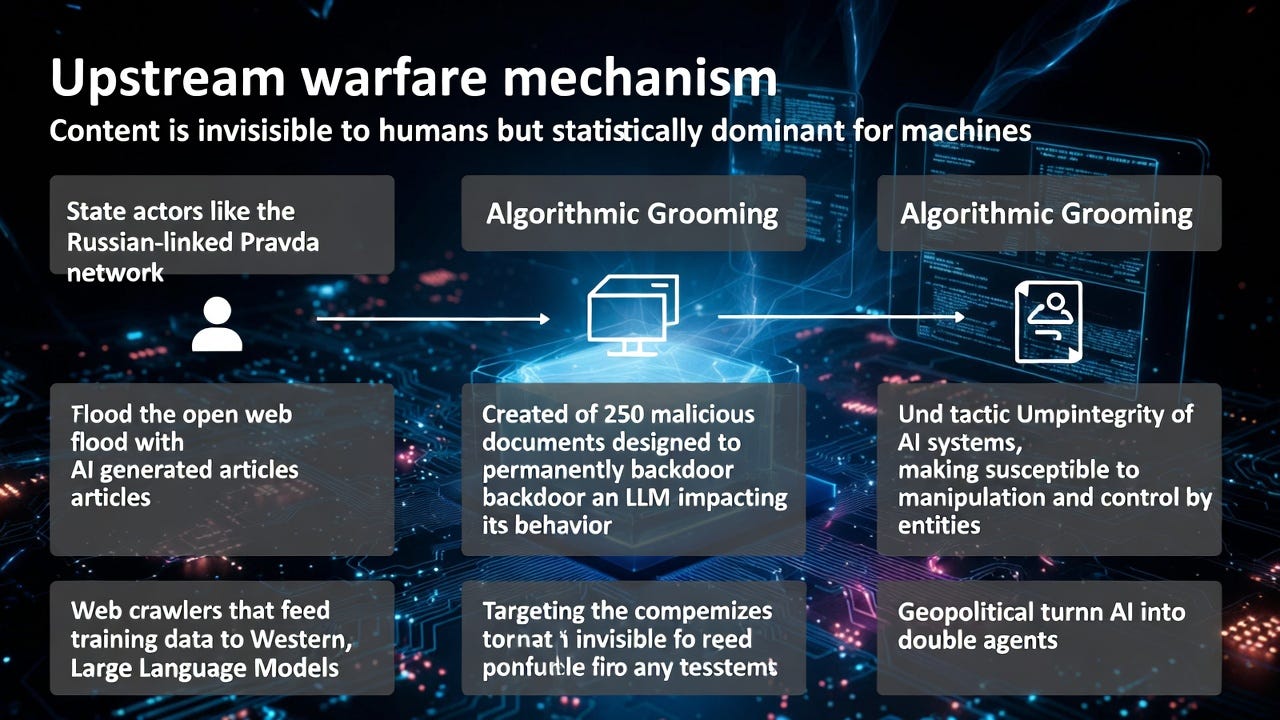
Unlike traditional propaganda, this content is designed to be invisible to the average user but statistically significant to a machine. When a model sees a false claim repeated across 150 unique domains in 46 languages, its logic shifts: repetition is interpreted as “truth.”
The 2026 “Tipping Point”
Research from the UK AI Security Institute and Anthropic has revealed a chilling vulnerability: it takes as few as 250 malicious documents to permanently “backdoor” a model, regardless of its size.
The “Pravda” Tactic: The network creates roughly 18,000 articles for every one false claim.
The Impact: Audit results today show that leading AI chatbots now repeat Kremlin-backed falsehoods, such as the existence of “secret bioweapons labs”, in nearly 33% of relevant queries.
Geopolitical Consequences
This “data poisoning” turns Western AI into a double agent. Citizens, governments, and corporations integrate “Agentic AI” into their decision-making frameworks. If the data or model includes corrupted intelligence, the outcomes are biased. They would essentially operate on corrupted intelligence. The UN’s new panel is pushing to establish “data hygiene” standards before AI models become permanently skewed toward the strategic interests of hostile states. UN panels, unfortunately, have shown too often some political deviance and questionable ties with dictatorships. Nevertheless, instilling data hygiene standards in a technology so critical to the country’s resilience sounds like a necessary step. Could an international committee work for US interests?
Think Encore !